Milad-un-Nabi 2026: History, Significance, Why Muslims Remember the Prophet ﷺ
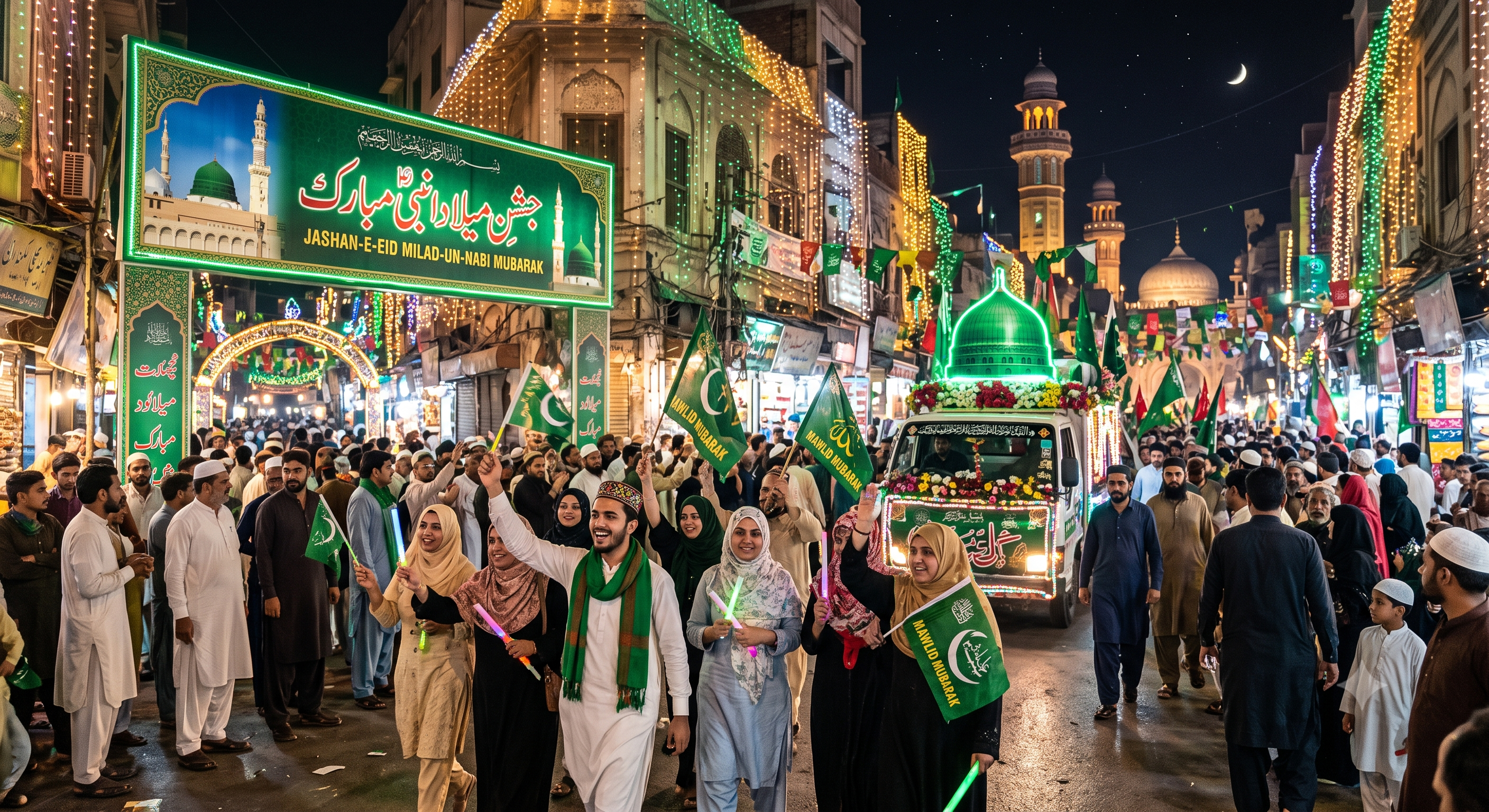
Milad-un-Nabi, also known as Mawlid al-Nabi or Eid Milad-un-Nabi, is a commemoration observed by many Muslims in remembrance of the birth and life of Prophet Muhammad ﷺ, the final Messenger of Allah.
For millions of Muslims, the occasion is not simply about remembering the day on which the Prophet ﷺ was born. It is an opportunity to remember his extraordinary character, his mercy, his teachings, his sacrifices and his message of worshipping Allah and living with justice, compassion and good character.
When is Milad-un-Nabi in 2026?
In India, Milad-un-Nabi 2026 is currently listed as Wednesday, August 26, 2026, corresponding to 12 Rabiʿ al-Awwal 1448 AH in calendars that place the commemoration on that date. Islamic dates can vary between regions because the Islamic calendar is lunar and communities may follow different moon-sighting or calendar methods.
The date of the Prophet Muhammad’s ﷺ birth itself is also a matter of historical discussion. 12 Rabiʿ al-Awwal is a widely held traditional date, particularly among many Sunni Muslims, but it is not universally agreed upon. Some traditions give other dates, including 17 Rabiʿ al-Awwal. Therefore, it is better to describe 12 Rabiʿ al-Awwal as the widely observed traditional date rather than claim that the exact date is historically certain.
What Does Milad-un-Nabi Mean?
The Arabic word Mawlid means "birth" or "birthplace," while Mawlid al-Nabi refers to the birth of the Prophet ﷺ. Milad-un-Nabi is therefore associated with remembering the birth of Prophet Muhammad ﷺ and, more importantly, remembering his Seerah — his life, character, teachings and mission.
The Prophet ﷺ was born in Makkah around 570 CE, traditionally associated with the period known as the Year of the Elephant. He belonged to the respected Quraysh tribe and was from the family of Banu Hashim. His father, Abdullah, passed away before his birth, and his mother was Aminah bint Wahb.
From his earliest years, Allah prepared him for an extraordinary mission. Before receiving revelation, Muhammad ﷺ was already known among his people for his honesty and trustworthy character. He was famously known as:
The Beginning of Prophethood
At the age of approximately forty, Muhammad ﷺ would regularly spend time in reflection and worship in the Cave of Hira near Makkah. It was there that the first revelation came through Angel Jibril عليه السلام.
اقْرَأْ بِاسْمِ رَبِّكَ الَّذِي خَلَقَ
"Read in the name of your Lord who created."
— Surah Al-Alaq 96:1
This marked the beginning of the Prophetic mission. The message of Islam called people toward:
The Prophet Muhammad ﷺ Was a Mercy
One of the most important reasons Muslims remember the Prophet ﷺ is his extraordinary mercy. The Qur'an describes him as a mercy to the worlds:
وَمَا أَرْسَلْنَاكَ إِلَّا رَحْمَةً لِّلْعَالَمِينَ
"And We have not sent you, [O Muhammad], except as a mercy to the worlds."
— Surah Al-Anbiya 21:107His mercy was not limited to his companions or family. He showed kindness toward children, the elderly, the poor, travellers and even people who opposed him. His life demonstrated that strength does not require cruelty and leadership does not require arrogance.
The Prophet's ﷺ Character
If there is one subject that should be at the heart of any Milad gathering, it is the character of the Prophet ﷺ. He taught Muslims that faith should be reflected in behaviour.
Honesty
He never made lying a part of his message or his dealings.
Mercy & Forgiveness
He forgave when he had the power to take revenge.
Humility
Despite being the leader of a growing state, he lived simply and repaired his own belongings.
Patience & Endurance
He endured rejection, insults, persecution and personal loss with unwavering resolve.
Justice
He taught that justice should never be abandoned because of personal feelings or status.
Generosity
He encouraged Muslims to care for the poor, needy, orphans and neighbours.
The Prophet ﷺ and His Family
The Seerah also teaches Muslims the importance of family. The Prophet ﷺ loved his family and treated his wives with kindness. He loved his daughters and grandchildren and demonstrated affection openly. His household provides Muslims with lessons about marriage, parenting, patience, forgiveness, and responsibility.
Why Do Muslims Celebrate or Remember Milad-un-Nabi?
Muslims who observe Milad-un-Nabi generally regard it as an opportunity to express love, gratitude and remembrance of the Prophet ﷺ. Common reasons include:
- Remembering the Prophet ﷺ: Studying his life and remembering the sacrifices he made to convey Islam.
- Expressing Love: Love for the Messenger of Allah ﷺ is deeply important in Islamic faith.
- Learning the Seerah: Hearing lectures about his life, character, and mission.
- Sending Salawat: Increasing the recitation of Salawat/Durood upon the Prophet ﷺ.
- Encouraging Good Character: Emphasizing positive moral behavior in daily life.
- Helping Others: Distributing food, giving charity, and assisting the needy.
How Is Milad-un-Nabi Observed?
There is no single worldwide format for Milad-un-Nabi. Practices differ according to countries, communities, schools of thought and local traditions. Common activities include:
Is Milad-un-Nabi Obligatory in Islam?
This is an important question because Muslims have different scholarly opinions about Mawlid.
Permitted / Encouraged Opinion
Gatherings are viewed as an opportunity to study the Seerah, send Salawat, give charity, and express gratitude to Allah, provided no prohibited practices are involved.
Not Established / Innovation (Bid'ah)
Considered an innovation in religious rituals, as the Prophet ﷺ, his Companions, and the earliest generations did not establish an annual birthday celebration.
"Because this is a genuine difference of scholarly opinion, Muslims should discuss it with knowledge and respect rather than turning the subject into hostility between Muslims."
Milad-un-Nabi and the Qur'an
لَّقَدْ كَانَ لَكُمْ فِي رَسُولِ اللَّهِ أُسْوَةٌ حَسَنَةٌ
"Indeed, in the Messenger of Allah you have an excellent example."
— Surah Al-Ahzab 33:21This verse gives us an important perspective. The Prophet ﷺ is not only someone whose birth Muslims remember. He is an example to follow. His Sunnah provides guidance about worship, family, business, leadership, friendship, forgiveness, patience, justice and everyday life.
Milad-un-Nabi 2026: A Time for Reflection
As Milad-un-Nabi 2026 approaches, Muslims around the world will once again remember the life of Prophet Muhammad ﷺ. But beyond the decorations, gatherings and speeches lies a deeper question:
How much of the Prophet's ﷺ character is present in our own lives?
- • Do we speak the truth?
- • Do we forgive when wronged?
- • Do we help the poor and needy?
- • Do we treat our parents with kindness?
- • Do we treat our family with compassion?
- • Do we follow the Sunnah in everyday life?
The Real Spirit of Milad-un-Nabi
The real value of remembering the Prophet ﷺ is not limited to one day. If Milad makes us remember the Prophet ﷺ for one day but we forget his teachings the next day, we have missed an important opportunity.
The better goal is to carry the lessons of the Seerah throughout the year. Follow his Sunnah. Send Salawat upon him. Teach his character to our children. Help those who are struggling. Speak the truth. And most importantly, strengthen our relationship with Allah.
Conclusion
Milad-un-Nabi is observed by many Muslims as a time to remember the birth and life of Prophet Muhammad ﷺ. The traditional association with 12 Rabiʿ al-Awwal is widespread, although the exact historical date of his birth is debated.
The greatest tribute to the Messenger of Allah ﷺ is not simply to speak about his character. It is to try to live by it.
اللَّهُمَّ صَلِّ عَلَى مُحَمَّدٍ وَعَلَى آلِ مُحَمَّدٍ
"May peace and blessings be upon our beloved Prophet Muhammad ﷺ."